Taiwan’s energy debate has traditionally centered on one fundamental question: Do we have enough electricity?
As artificial intelligence (AI), data centers, semiconductor manufacturing, and other high-tech industries continue to expand, electricity is becoming more than a basic requirement for industrial production. It is increasingly a critical factor in industrial competitiveness. Taiwan’s Ministry of Economic Affairs has incorporated the additional demand from semiconductor expansion, data centers, and AI-related technologies into its latest power supply and demand assessment, projecting average annual electricity demand growth of approximately 2.5% between 2026 and 2035.
The question Taiwan must now address is not simply whether it has enough electricity, but whether it has access to more resilient and reliable power.
Taiwan’s industrial structure creates electricity demands that differ from those of many other economies. Semiconductor fabs, AI data centers, precision manufacturing facilities, and other critical industrial operations often require continuous power, sometimes around the clock. Hospitals and telecommunications base stations must also maintain power availability, particularly during emergencies and natural disasters.
A power outage or supply disruption can result in far more than a temporary interruption. It may halt production lines, disrupt essential digital services, and even compromise public safety.
These facilities share one defining characteristic: the cost of a power interruption can far exceed the cost of the electricity itself.
Given Taiwan’s exposure to earthquakes, typhoons, and extreme weather, energy resilience must extend beyond keeping the power grid stable. Even when the broader grid remains operational, localized outages can occur because of natural disasters, equipment failures, or other unexpected events.
Beyond grid reliability, an equally important question is whether a business, hospital, or telecommunications site can continue operating independently when external power becomes temporarily unavailable.
Backup power is therefore evolving from an emergency measure into an essential component of energy resilience. As requirements move beyond simply having electricity available to ensuring longer operating durations, independent power supply, and suitability for different environments, the respective roles of different energy technologies are becoming increasingly important.
Diesel generators remain a mainstream backup power solution for many applications for good reason. The technology is mature, fuel supply networks are well established, and these generators can provide relatively stable power during grid outages.
Battery energy storage systems (BESS), meanwhile, excel at rapid response and play an important role in short-duration power management and uninterruptible power supply (UPS) applications.
However, each technology has its own operating constraints. Diesel generators depend on a continuous supply of fuel and produce noise and combustion emissions during operation. Battery energy storage is constrained by storage capacity, weight, charging time, and discharge duration. For applications requiring extended backup power, larger battery systems may be necessary, increasing overall system size and cost.
Against this backdrop, hydrogen power generation, which uses fuel cells to convert hydrogen into electricity through an electrochemical process, is emerging as an alternative worth considering.
When hydrogen is used as fuel, fuel cells generate electricity without directly producing CO₂ at the point of generation. Because they do not rely on conventional internal combustion, they can also offer lower noise levels and reduced local air pollutant emissions compared with combustion-based generators.
These characteristics make hydrogen power generation a potentially valuable option for selected applications where environmental performance, noise reduction, and sustained power availability are important.
Nevertheless, hydrogen faces clear challenges. Hydrogen production costs, supply availability, storage and transportation infrastructure, and upfront equipment investment remain significant barriers to broader deployment.
The key question, therefore, is not whether hydrogen can replace diesel generators or batteries across the board. It is where the value hydrogen provides can justify its current costs and supply chain requirements.
Rather than asking whether hydrogen can be used everywhere electricity is needed, it is more useful to identify applications that require both high power reliability and reduced local emissions.
Hospitals, telecommunications infrastructure, data centers, critical facilities, emergency response operations, and remote locations may require more than a few minutes of emergency power. Depending on the application, they may need backup electricity for several hours or longer.
As backup durations increase, fuel logistics, noise, and combustion emissions associated with diesel generators may become important considerations. This is where fuel cells can offer distinct advantages through quiet operation and low local emissions.
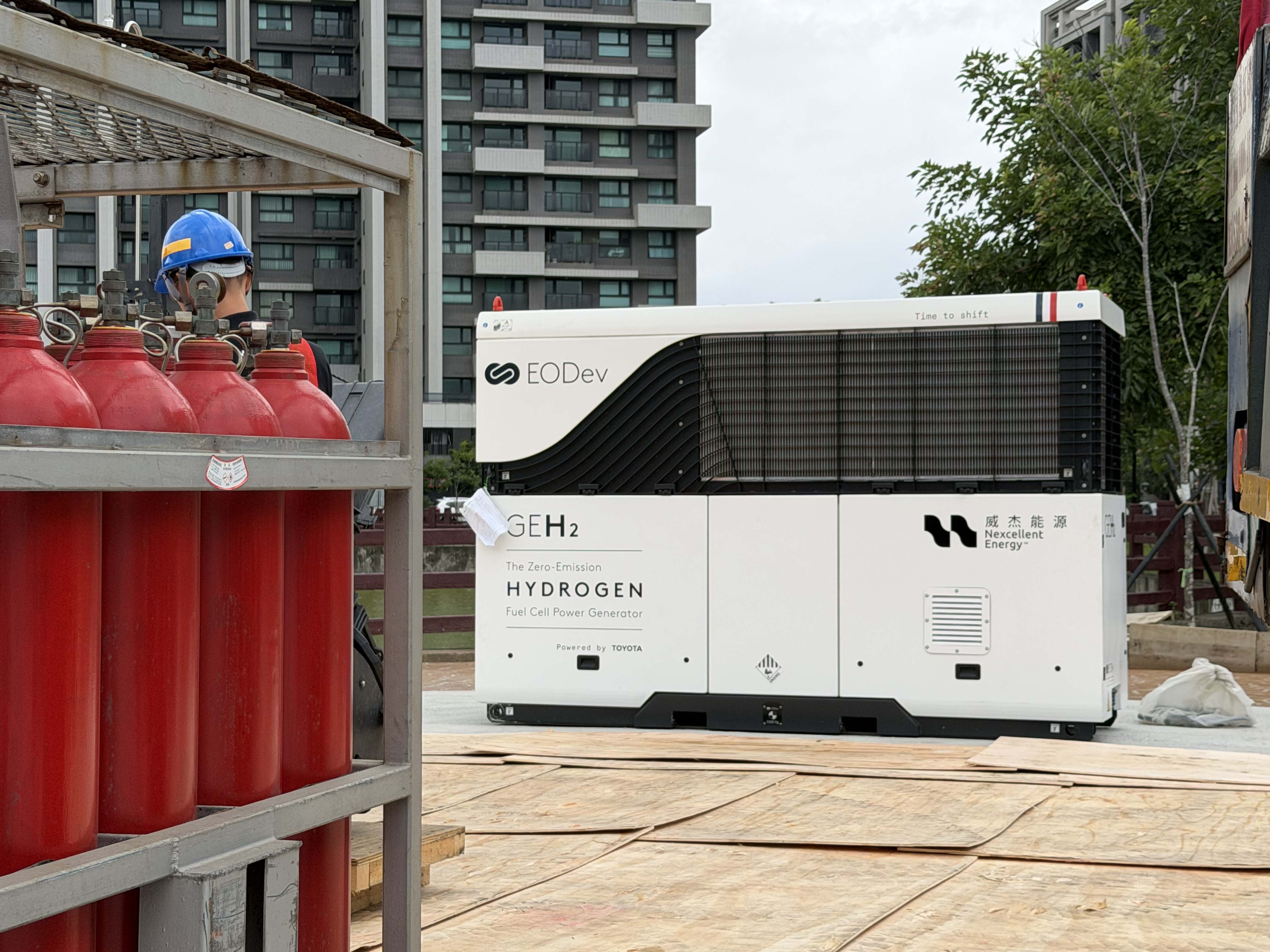
One example of a commercially available solution is the EODev GEH2 hydrogen power generator. It features a 70 kW Toyota PEM fuel cell, a 44 kWh lithium iron phosphate (LiFePO₄) battery with a battery management system (BMS), and integrated power conversion, control, and hydrogen safety systems.
Such systems represent more than an additional power generation option. They illustrate how backup power is evolving from standalone equipment toward integrated energy solutions combining hydrogen generation, energy storage, and intelligent power management.
Policy developments also reflect growing interest in fuel cell deployment. Taiwan’s Energy Administration, Ministry of Economic Affairs, has promoted a subsidy program for stationary fuel cell power generation systems, supporting installations ranging from 1 kW to 2 MW through the end of 2029.
Although this program does not directly subsidize hydrogen generators as a specific equipment category, it signals continued policy support for the practical deployment of fuel cell technologies and distributed power generation.
As backup power requirements evolve from simply maintaining electricity availability to ensuring extended operation, energy independence, and environmental adaptability, the focus is shifting toward how different power sources can work together.
Combining the grid, energy storage, and hydrogen power generation may offer a more flexible approach, allowing each technology to contribute where it performs best and support the others when conditions change.
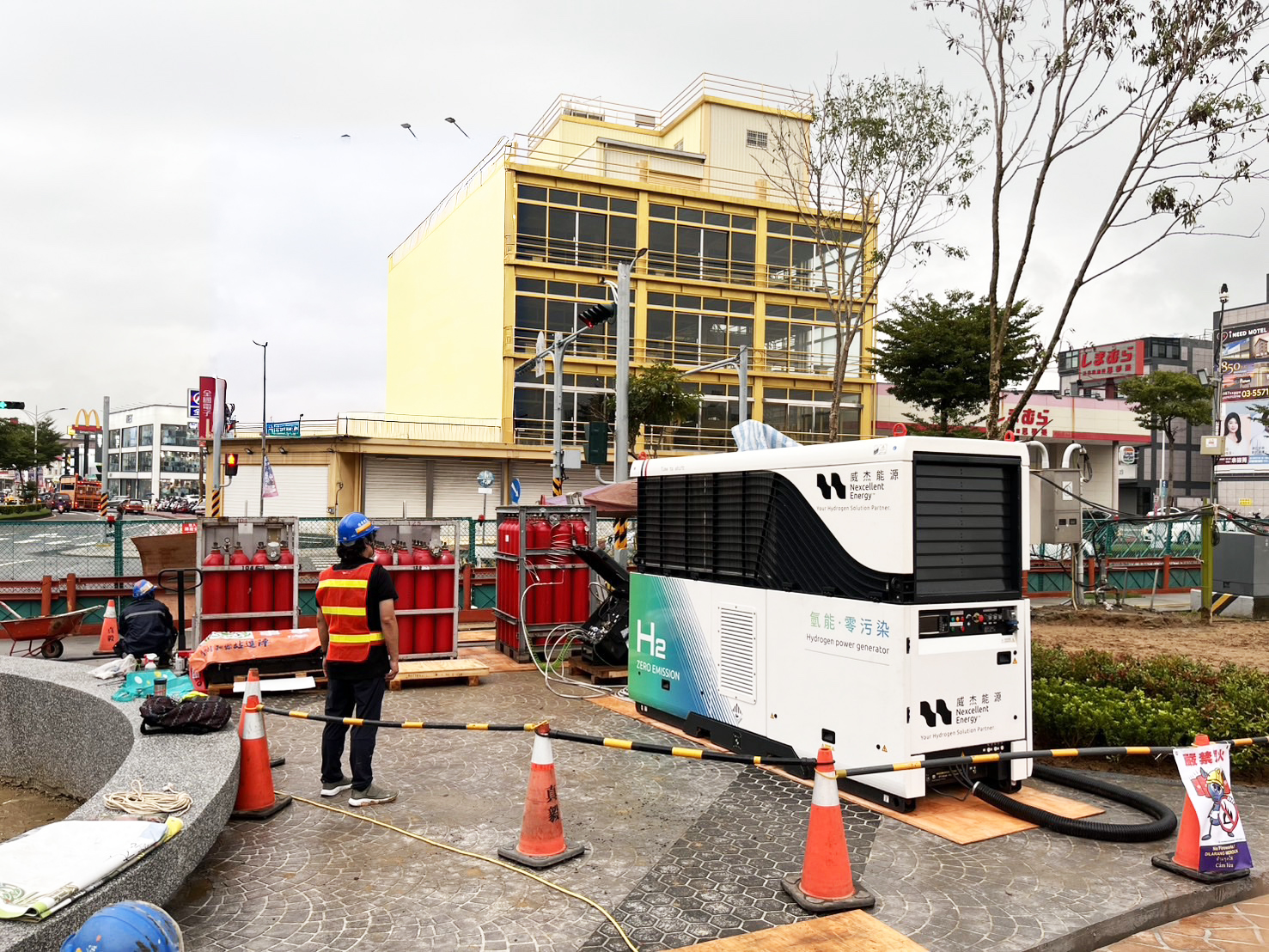
This approach is moving beyond concept toward practical applications. Nexcellent Energy has introduced an 80 kW-class hydrogen power generator designed for applications requiring reliable, low-emission power.
The system delivers a rated output of 80 kW, with a maximum output of 88 kW. Based on PEM fuel cell technology, it features a stated conversion efficiency of 52% and a noise level below 55 dB. The system can also be configured and connected in parallel according to application requirements, allowing power capacity to be scaled to meet specific needs.
Beyond individual generators, the greater opportunity lies in integrating different power sources into a coordinated energy architecture.
Taiwan could progressively develop a multilayered power framework combining the grid, battery energy storage, and hydrogen power generation:
The goal is not to convert all of Taiwan’s electricity supply to hydrogen. Rather, it is to build a more diversified energy mix in which different technologies serve the applications best suited to their strengths.
Taiwan does not need all its electricity to come from hydrogen. It needs a broader range of energy solutions to strengthen resilience, improve flexibility, and provide more options when reliable power matters most.